Now that you have a bag- {Make one HERE if not}

I have a great tool that I use in my counseling practice to check in with what perceptions and beliefs my clients may have by playing a game I call "Story in a Bag."
Listening to our children's stories not only builds relationships with our children but they also can reveal a lot about what’s going on in their world.

You may have recognized this game over at How Does She right {HERE} where I spoke on how to play the game.
Simply have a bag full of random items like this:

Then have your child pick 3 to 5 objects from the bag.

Then they have to come up with an original story using those items in it. Have them come up with a moral to their story if they are old enough to do so. I love to hear what they come up with!

Many of you may be interested about how I use this Story in a Bag to understand more about the children I am seeing.

I have a great tool that I use in my counseling practice to check in with what perceptions and beliefs my clients may have by playing a game I call "Story in a Bag."
Listening to our children's stories not only builds relationships with our children but they also can reveal a lot about what’s going on in their world.

You may have recognized this game over at How Does She right {HERE} where I spoke on how to play the game.
Simply have a bag full of random items like this:
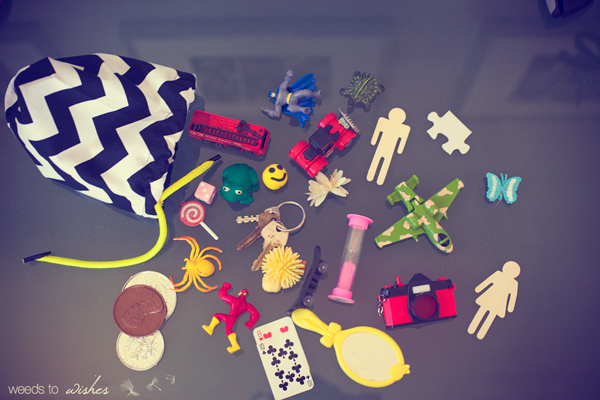
Then have your child pick 3 to 5 objects from the bag.

Then they have to come up with an original story using those items in it. Have them come up with a moral to their story if they are old enough to do so. I love to hear what they come up with!

Many of you may be interested about how I use this Story in a Bag to understand more about the children I am seeing.
NOTE: Now, I am not advocating taking this tool and using it as a replacement for a "therapy session" but I am saying you can use it to listen deeper to what your child is trying to
tell you through their story.
Questions to ask yourself that can reveal a lot about what's going on internally are:
What is a theme in my child’s story?
Does my child seem to have a lot of worry or anxiety themes?
Is there a positive or negative ending?
Is there resolution at the end of the story?
How are problems solved?
What values or beliefs are portrayed in the story?
What kind of attitude does the main character have when
approaching a problem?
Who solves the problem?
Was there one way or more than one way to solve the problem?
The answers to these questions may parallel a theme or an attitude your child may have.
Things to be aware of and may require more attention are:
- The story has sexual content in it: is never appropriate to have sexual content in a child's story or play. If you are at all concerned, seek professional help.
-There is a pattern of stories that have anxiety or fears and often go unresolved: Children often tell stories about stuff that worries or scares them- but usually there is a solution or resolution to the conflict.
-There is a lack of detail in their story: If your child is simply retelling a familiar movie or tv show and has a difficult time coming up with something new- then there could be concern. Childhood should be a time when imagination is at it's peak. Just keep observing to see if it translates in their everyday life. Are they playing age appropriately?
-Most of their stories are negative or pessimistic: Take note if the environments in their stories are dark and depressing or if the heros in the stories are powerless and always have failures. Just be aware if this at all parallels any behavior or attitudes you have noticed in your child.
Again seek professional help if you internally feel uncertain. They can help with any doubts or questions you may have!
Listen to your intuition- you know your child better than anyone.
Any other questions- feel free to drop me a line. I love to help!
besitos, xo



 Posts
Posts